




For Tiff Wicks, the garden at her Toowoomba home has become far more than a collection of beautiful plants. It is a family refuge, a creative outlet and a garden that has gradually evolved through trial, patience and plenty of hands-on work.

Tiff is a psychologist by profession and works part-time while raising five children under ten with her husband, Damien, a builder. The couple are both Toowoomba born and bred, and have lived at the property for around seven years.

When they first bought the home, there was virtually no garden at all. The original house sat at ground level and was in need of considerable work, so Damien lifted the house and built underneath it. Outside, Tiff began almost from scratch.

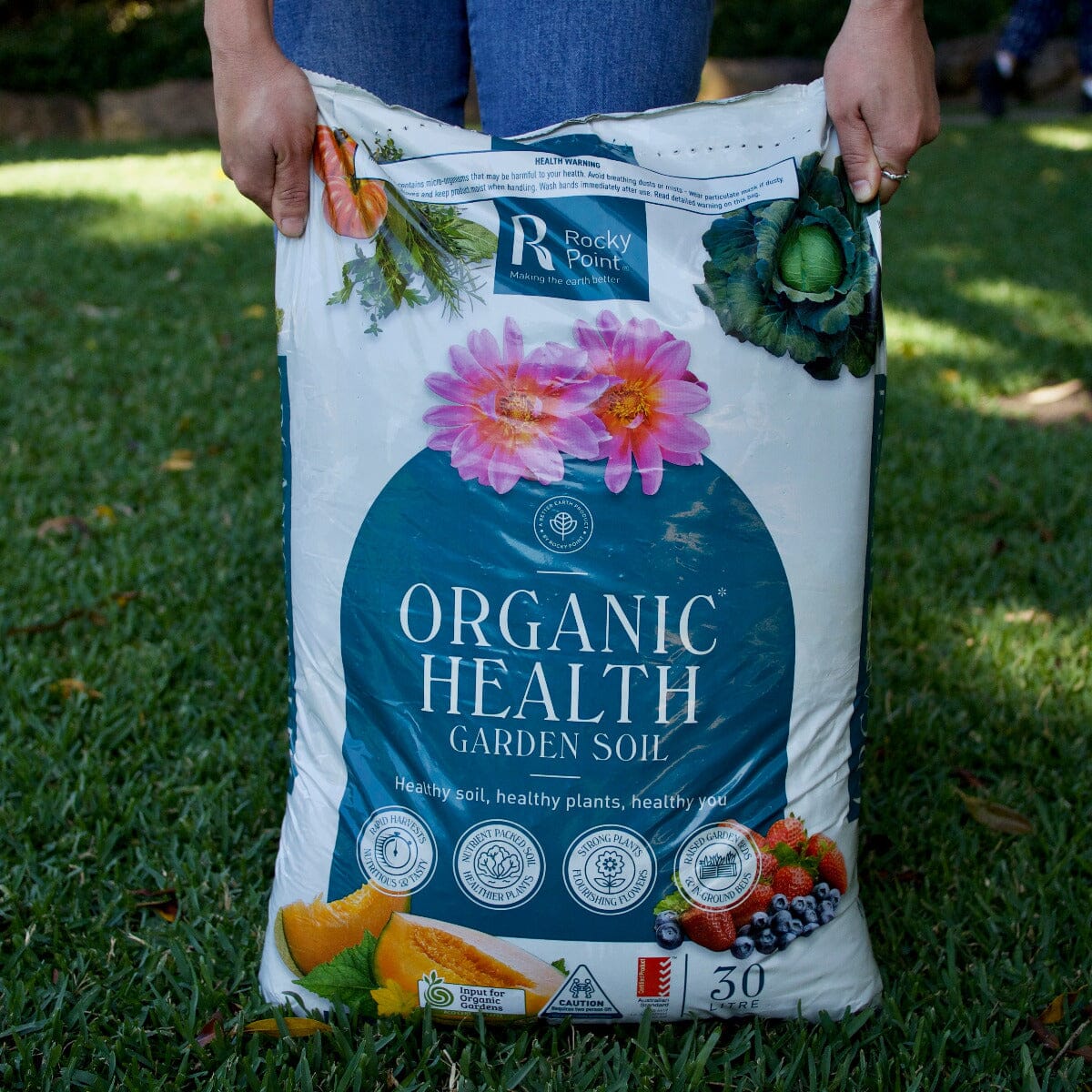
The first lesson was the importance of soil preparation. After a few false starts, Tiff realised that creating healthy soil had to come before creating the garden she imagined.

In the early years, the garden was filled almost entirely with annual flowers. The result was spectacular while everything was blooming, but maintaining it was relentless. Once one season of annuals finished, large parts of the garden were suddenly bare and had to be replanted.

Over time, Tiff began creating a much stronger permanent framework.

Hedges, shrubs and feature trees now provide structure throughout the year. Flowering peaches, wisteria and a weeping mulberry add character and height, while established plantings such as buxus help define the garden's spaces.

The different conditions within the property have also shaped the planting. One side of the garden is hot and dry, while the opposite side is considerably shadier. Plant choices respond to those microclimates rather than trying to make every part of the garden behave the same way.

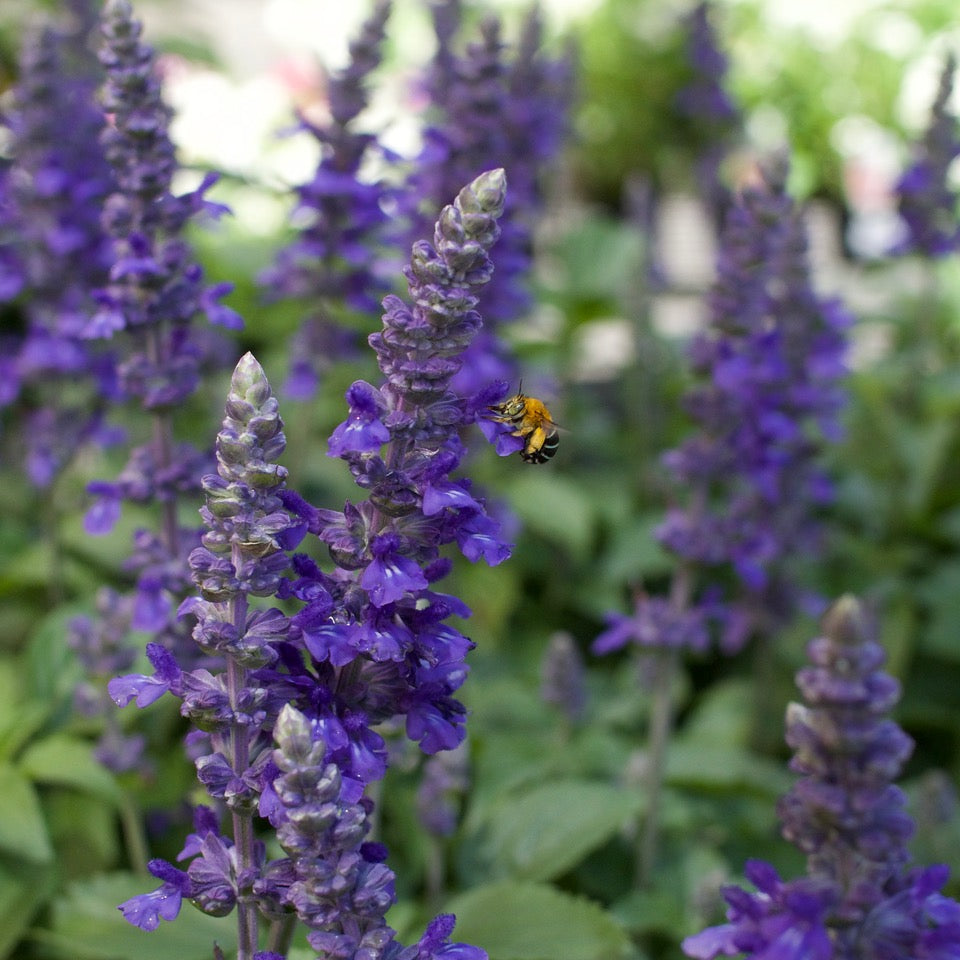
Beneath the trees and structural planting is another layer of dependable perennials. Salvias, daisies, hydrangeas, abutilons and other long-lived plants provide foliage, flowers and continuity even when the seasonal displays have finished.


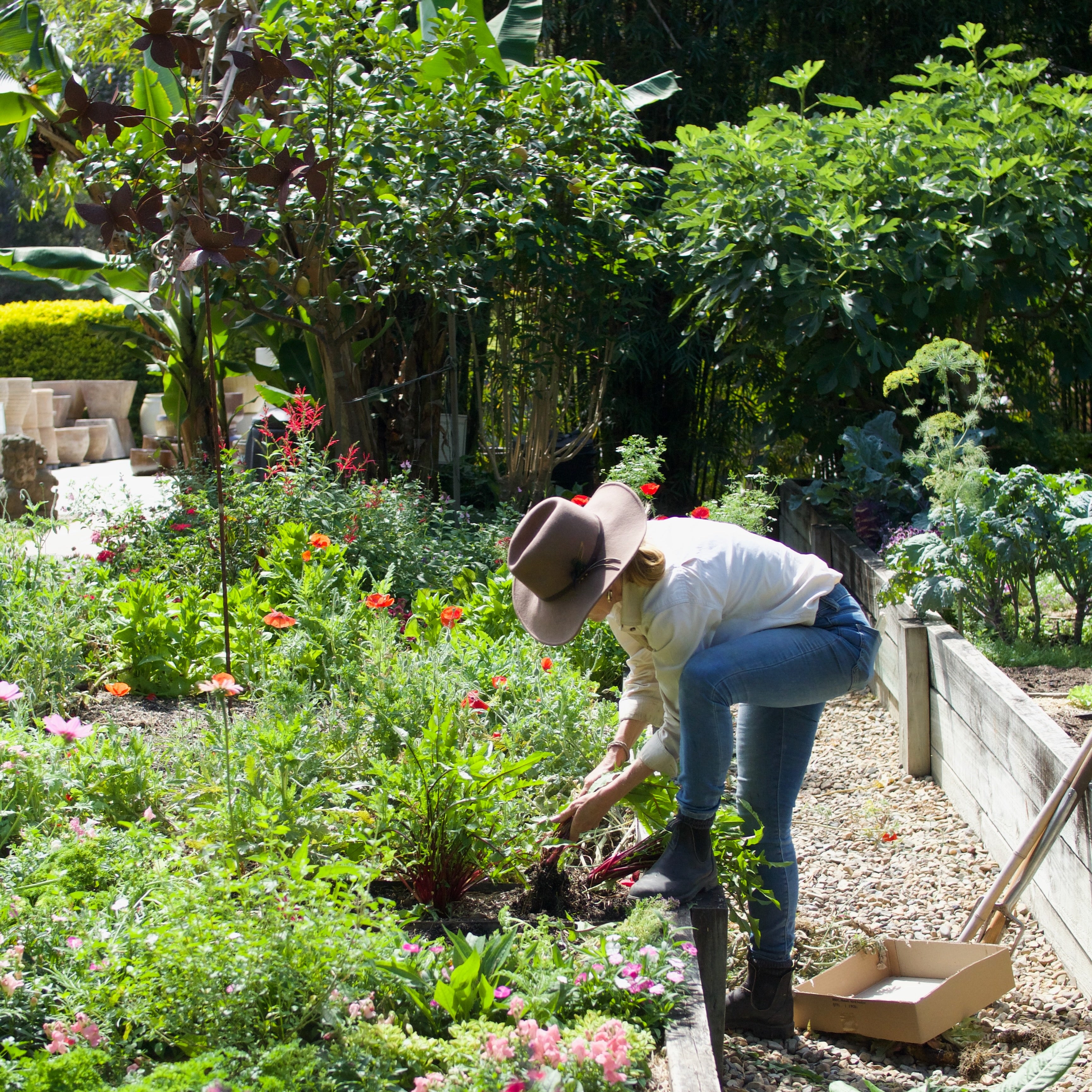
Then come what could almost be described as the garden's seasonal lollipops. In spring, bulbs planted throughout autumn and winter emerge among masses of primulas, pansies, poppies and other cool-season flowers. Tiff grows some plants from seed, raises others from seedlings and increasingly propagates and divides plants herself.
Amazingly, 90% of the floral display is self seeded in her spring 2026 garden. Tiff does not mulch which can prevent germination, plus the bed sizes makes dealing with all the thinning and hand weeding of the less desirable plants that also love her garden.

As temperatures rise and the spring annuals begin to fade, the garden changes again. Dahlia tubers emerge, joined by summer-loving cosmos, zinnias and other annual flowers. Underneath it all, the permanent framework remains.

That approach has made the garden both more sustainable and more achievable financially. With five young children, a mortgage and the ordinary costs of family life, this is very much a garden created thoughtfully rather than through unlimited spending.

Recycling and reusing materials has become part of its character.
One of the garden's most enchanting features is a small summer house, built by Damien around beautiful vintage stained-glass windows he sourced through his work in the building industry. Much of it was constructed from second-hand materials.
The garden paths have a particularly local story. Many are made from old bricks rescued from the former Toowoomba brickworks before they were discarded. Some still carry their original stamps, bringing a little piece of Toowoomba's history into the garden.

Throughout the property, archways, arbours, obelisks and other structures help create the romantic feeling of the garden, with Damien's building skills allowing the couple to create much of it themselves from reclaimed materials.
For all its beauty, however, this isn't a garden where children are expected to stand back and simply admire the flowers.

A dedicated play area includes a cubby house built by Damien, a slippery slide and a sandpit. There are chickens and the family's border collie, Polly, and the garden belongs as much to the children as it does to their parents.
Tiff describes the garden as the family's refuge. When life inside a house filled with five young children reaches boiling point, the solution is often very simple: everybody goes outside.
Almost immediately, things change.

The children have grown up understanding the work involved in creating the garden. They aren't taught that it is "Mum's garden" and therefore untouchable. Instead, they are encouraged to explore it and enjoy it. A garden growing gardeners? Perhaps.

And despite its wonderfully abundant, romantic appearance, perhaps the most interesting thing about Tiff's garden is that it hasn't been created overnight. It has evolved season by season, through failed experiments, better soil, propagation, recycled materials and an increasing understanding of how permanent planting and seasonal colour can work together.

The result is a garden that feels joyful rather than precious: beautiful enough to inspire, practical enough for a young family, and very much alive.